This is an English translation of my Korean interpretation of a Ribbit Capital report, in four parts:
- AI Transformation: Redesigning a Business Around Tokens
- Token Sourcing: The First Opportunity and the Final Moat
- The Agent Revolution: Selling Outcomes, Not Tools
- An Abundance of Intelligence: What Becomes Scarce?
Does your company produce tokens, refine them, or control their flow? This framework starts with that question.

People have always compressed complex information into small units. Their forms change over time, but their purpose remains: a minimal unit for remembering, trusting, and exchanging. We can call these units tokens.
What is a token in the AI era?
In the past, people were the ones interpreting the world. Clay tokens, tally sticks, and banknotes were information units designed to be easy for people to remember, trust, and exchange.
Now machines are taking on that role. To process our language, documents, and images, they need tokenization: breaking human representations into machine-readable units.
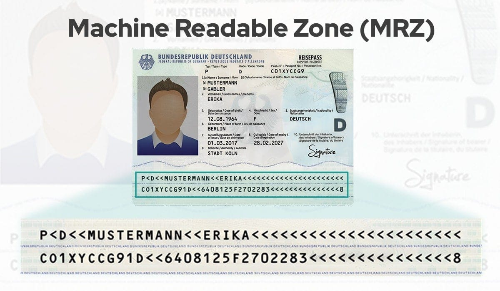
In this framework, tokens are the smallest information units that let machines read the world. Customer details, payments, behavior, and sensor readings all become tokens.
Relative value: not all data is equal
Seen as the resources an AI system needs to interpret and operate in the world, tokens have different relative values. Two useful dimensions are:
-
Scarcity: How difficult is the information to obtain?
-
Secrecy: Can only a particular person or company possess it?
For example:
- Web data is abundant and widely accessible.
- Astronomical and earth-observation data is scarce but often public.
- A hospital's medical images and interpretations are both scarce and proprietary.
The conclusion is straightforward.
Scarce, proprietary tokens have greater strategic value.
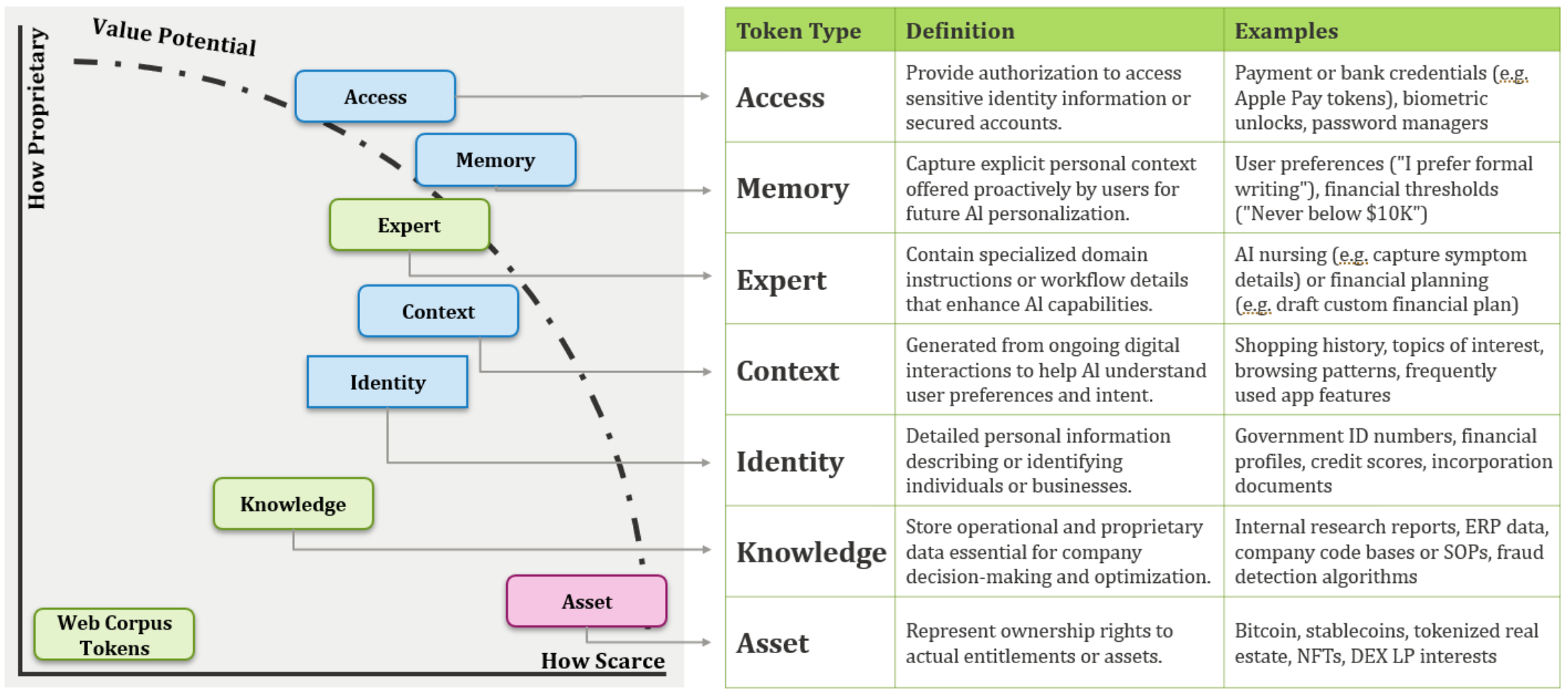
The colors indicate the type of token:
- Red: money and assets, such as balances, shares, and cryptocurrency.
- Green: expertise, such as a doctor's interpretation or a lawyer's case analysis.
- Blue: personal information, such as purchases, health records, and preferences.
Producing, refining, and combining tokens
Creation is only the beginning. Tokens can be refined into something more valuable.
A medical image becomes an interpretation. Combine that with a patient's family history and genetic information, and it may produce a more valuable output, such as a more accurate diagnosis.
Each token develops its own supply-and-demand curve through this process. Value depends on:
- How personal it is.
- How much information it contains.
- How fresh it is.
- How verifiable it is.
- How reusable it is.
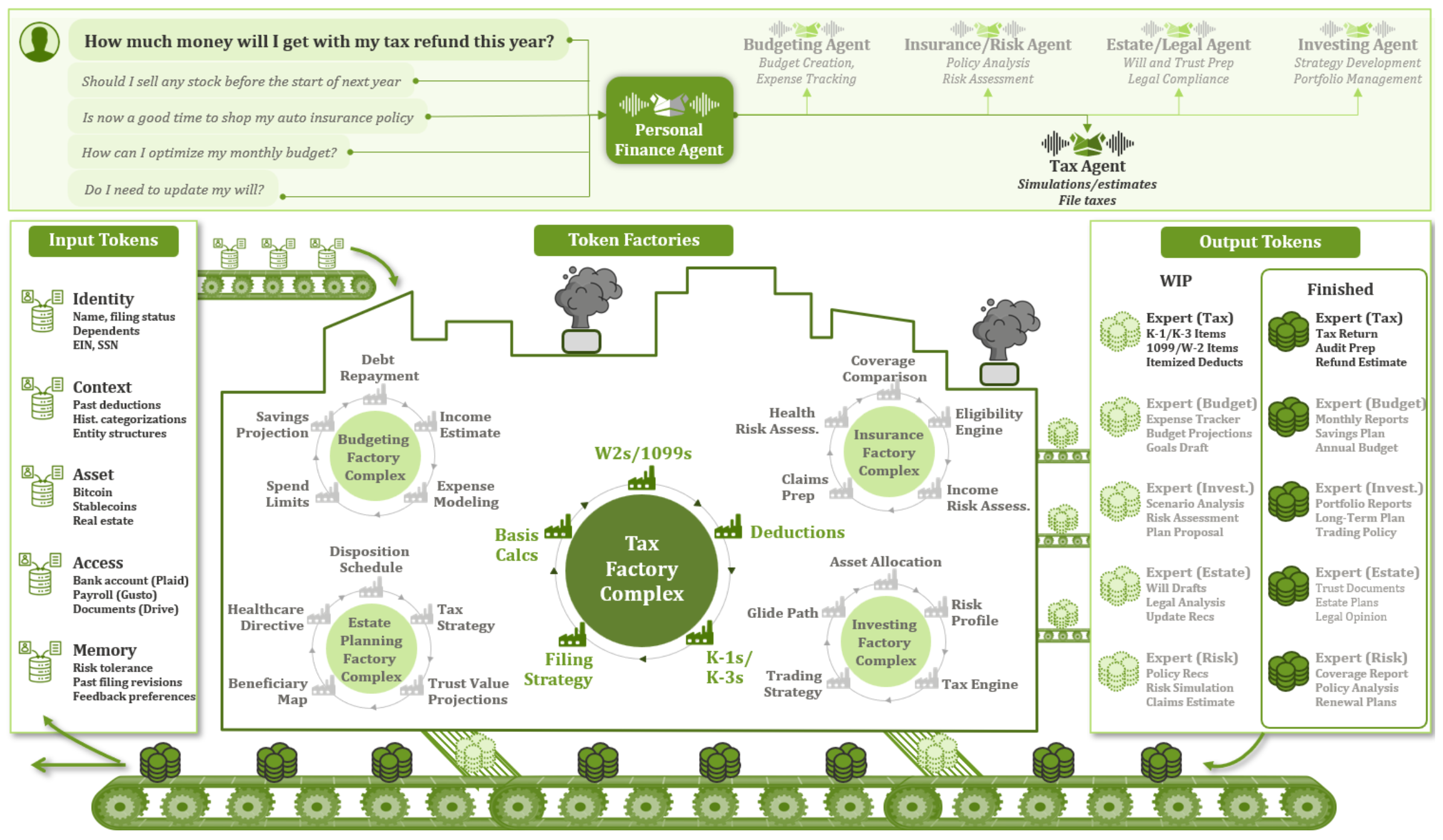
Token factories are where this production, refinement, and combination happen.
A token factory is a technology or organization that receives different tokens and converts them into higher-value tokens.
- Netflix takes viewing-history tokens and produces recommendation tokens.
- A hospital takes medical-image tokens and produces interpretation tokens.
In more familiar language, it is an engine for producing a higher level of intelligence.
Three roles for businesses
Businesses in this framework take three roles.
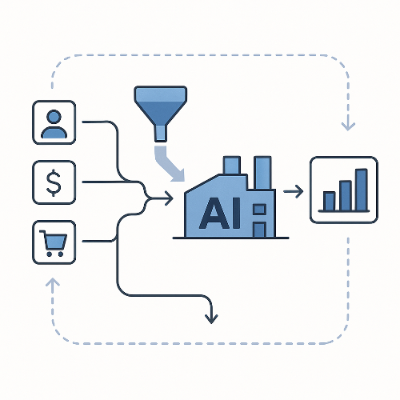
Token suppliers continuously produce customer, transaction, and behavior data. Commerce, finance, manufacturing, and healthcare generate it in the course of real work.
Token transformers process inputs into more valuable outputs: language models, recommendation and search engines, predictive models, and industry-specific AI.
Token orchestrators design and manage flows, security, and combinations. Payment networks, identity providers, and data intermediaries are examples.
Agents: the operators connecting token factories
An ecosystem needs an operator to use its tokens to solve problems.
AI agents take that role.
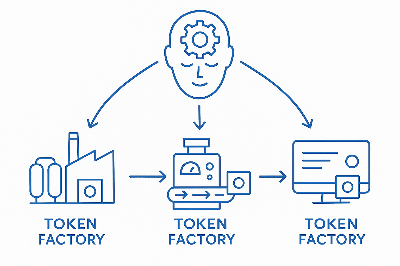
An agent is more than a chatbot. It is a user of token factories that reads an environment, makes decisions, and acts toward a goal.
Given a request, it:
- Decides which tokens it needs.
- Finds where to obtain them.
- Chooses which factories to use.
- Combines results and acts.
- Learns from feedback to improve its next action.
It is closer to an operating layer that accepts an entire unit of work and decides how to execute it than a tool that clicks pages on someone's behalf.
The foundation is an ecosystem of connected token factories.
The company's moat: a trust flywheel
This perspective makes the sources of advantage clearer.
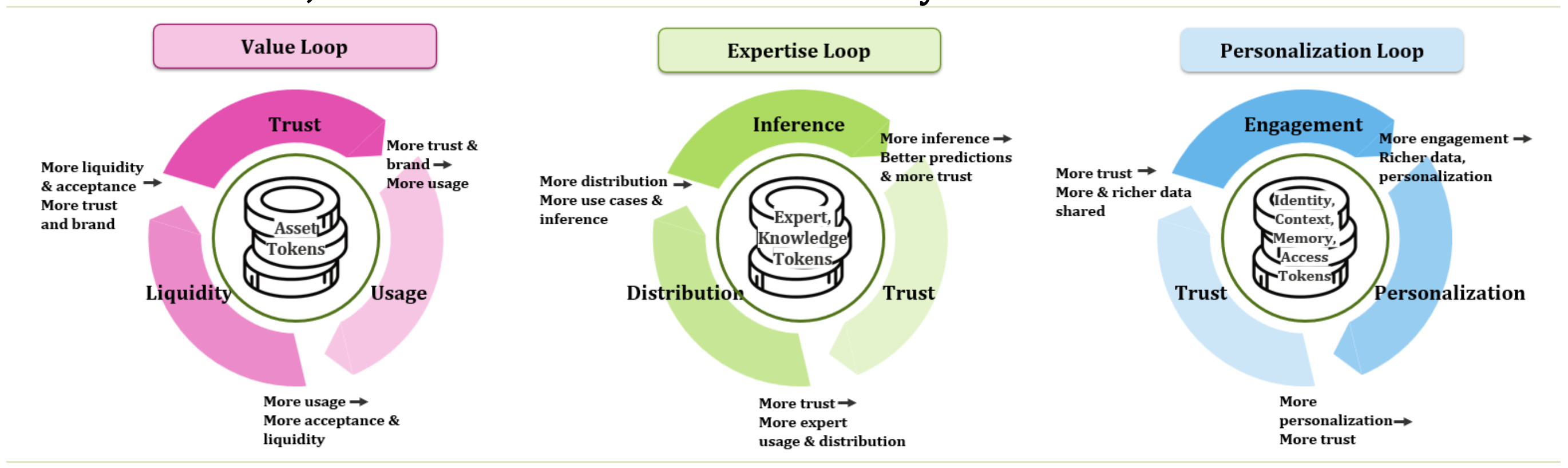
1. Companies accumulating valuable, proprietary tokens every day win.
Only companies trusted with customers' identity, context, and memories can keep obtaining them.
2. Agents may become interchangeable, but customer-facing token factories will not.
Whoever holds the customer relationship controls the data flow and feedback loop.
3. A factory's advantage is its output quality.
Factories extracting more value from the same input capture much of the market.
4. The lasting moat is a compounding token loop.
Better output → more input → better output → more trust → still more input.
Companies that sustain this structure survive over the long term.
Why now?
Three changes converged in 2025.
1. Collapsing costs. LLM inference costs fell to one-thousandth over three years. Frameworks and coding agents also cut the cost of building token factories.
2. Expanding inputs. Enterprise data, APIs, sensors, and synthetic data keep increasing the amount and variety machines can process.
3. Lower barriers to entry. Payments and infrastructure costs approach zero, making it possible for more people to build factories and work with global assets.
Competition is consequently expanding across the stack, from hyperscalers and data centers to agents. New businesses are emerging, and a redistribution of trillions of dollars in value has begun.
AI transformation means redesigning the token structure
Adding a chatbot isn't enough. Businesses need to redesign the underlying structure. Start with four questions.
1. What tokens do we accumulate?
Commerce collects purchases and delivery data; hospitals collect records, images, and prescriptions. What does your company generate every day?
2. How can those tokens be transformed?
Netflix turns viewing data into recommendations; Tesla turns driving data into autonomous-driving models. What intelligence could your tokens produce?
3. What identity, context, and memories will customers trust us with?
People trust Google with searches and Toss with financial data. What do customers trust you to hold?
4. Can agents operate in our business?
Amazon already automates inventory, pricing, and delivery. Could your core work be delegated to agents? Could outside agents access it?
We are in an early period of imbalance. Companies that build the loop first will widen the gap each day:
- More tokens produce better outputs.
- Better outputs attract more customers.
- Those customers leave more tokens.
The companies that start that compounding process first will reshape the market.