KAIST DAVIAN Lab · ECCV 2022 · Co-first author
Style Your Hair
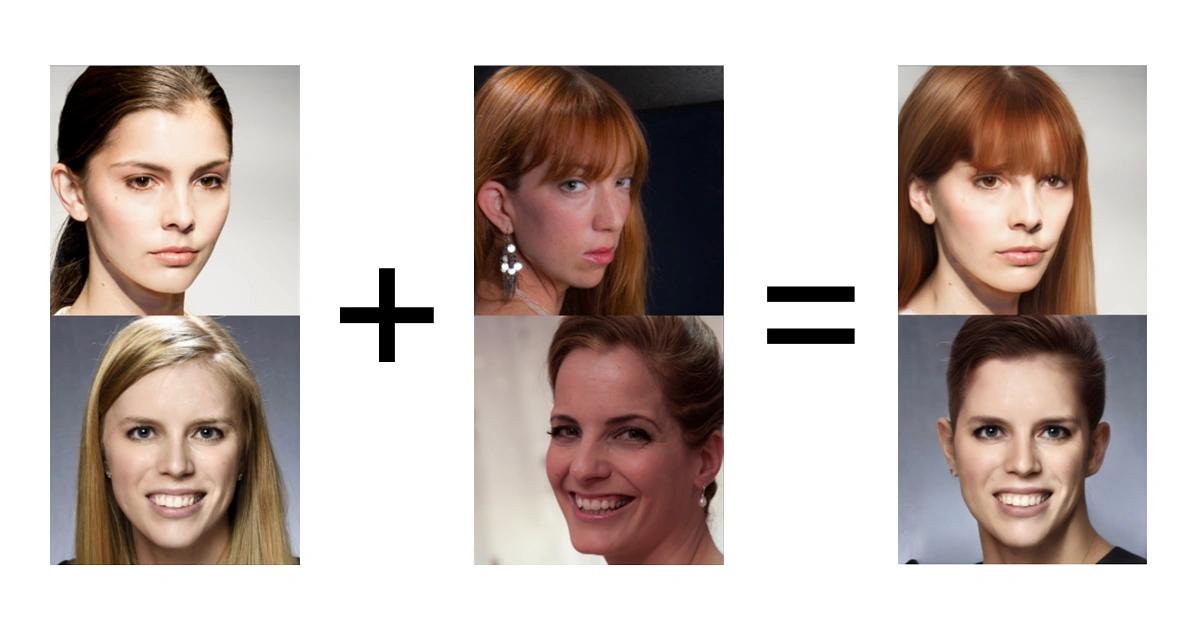
Testing how to transfer a hairstyle between faces with different poses.
A portrait and a hairstyle reference rarely have the same head pose. I implemented and trained an early model for the team’s experiments, then proposed and tested loss functions to improve pose alignment.
- Period
- Jul — Dec 2021 · Published in 2022
- Setting
- KAIST DAVIAN Lab · Advisor: Prof. Jaegul Choo
- My role
- Undergraduate Researcher · Co-first author
01 / Building the baseline
Build a working baseline for early experiments.
The team needed a working face-vid2vid-based model for early experiments. The target method’s implementation was not publicly available at the time. I independently implemented and trained a baseline using the paper, available predecessor code, and implementations of individual modules.
When a component or loss was unclear, I followed the citations back to the relevant papers and code. I implemented missing pieces and worked through details that were not fully specified in the target paper.
- Starting materialPaper + available predecessor code
- My implementationTraining system + trained baseline
- Initial useEarly experiments
Getting the system to train did not mean it matched the paper’s reported image quality. My implementation supported the team’s initial experiments; after the original authors released a more accurate model, the team adopted that model as the baseline.
02 / A tested hypothesis
Closer pose alignment, less hair detail.
I proposed, implemented, and tested a loss that penalized differences in yaw, pitch, and roll between the generated face and the face of the person receiving the hairstyle.
Yaw
Turn left / right
Vertical axisPitch
Nod up / down
Side-to-side axisRoll
Tilt side to side
Front-to-back axisCompare the two orientations in three components.
- Pose alignment
- Alignment became more accurate in my experiments.
- Hair detail
- Hair texture and individual strand detail were lost.
- Final status
- The loss was tested but was not adopted in the final method.
These are qualitative observations from my experiments, rather than a quantitative comparison.
03 / The published work
The team’s published method.
The team’s final method uses latent optimization to align reference hair, inpaint regions revealed on the recipient, and blend the result. Its local-style-matching loss helps preserve fine hair texture during alignment.
The paper’s published Pose Align Loss compares 3D facial-keypoint heatmaps. It is distinct from my unadopted yaw/pitch/roll experiment described above.
- My implementation
- A personally implemented and trained baseline used in early experiments, later replaced by the original authors’ model.
- My loss experiment
- A proposed and tested orientation constraint, with a qualitative pose/detail tradeoff. Not adopted.
- Team outcome
- Style Your Hair was published at ECCV 2022. I am one of its three co-first authors.
Taewoo Kim*, Chaeyeon Chung*, Yoonseo Kim*, Sunghyun Park, Kangyeol Kim, and Jaegul Choo.
Style Your Hair: Latent Optimization for Pose-Invariant Hairstyle Transfer via Local-Style-Aware Hair Alignment. ECCV 2022.
* Equal contribution.