In the not-too-distant future, everyone will have a personal AI assistant, something like Jarvis.
Do you agree?
If not, you may not enjoy this article. You probably won't agree with its conclusion.
Need and population
Imagine a graph for a product: the horizontal axis is how much someone needs it; the vertical axis is how many people feel that degree of need.
Specialist equipment
PeopleDegree of need →Essentials
PeopleDegree of need →Luxury goods
PeopleDegree of need →Everyday equipment
PeopleDegree of need →-
U-shaped, such as specialist equipment. Most people don't need it, few are beginners, and a small group of enthusiasts and professionals need it strongly. The high-need peak would be much smaller than the low-need one.
-
Rising, such as essentials. Almost everyone needs them to some degree, so more people fall toward the high-need end.
-
Falling, such as luxury goods. Only a small minority feel a strong need.
-
Bell-shaped, such as a keyboard. Most people feel a moderate need, with fewer at either extreme.
Now suppose that, at least at the moment of purchase, people buy because they really need something. People aren't perfectly rational, so it's a strong assumption, but perhaps reasonable for that particular moment.
This gives us a purchasing threshold.
A person's need for a product rises and falls with many factors. When it crosses a threshold, they buy. The threshold is the minimum need required for a purchase, and varies by person and product.
What changes a person's need?
Four broad groups of factors:
1. Personal: age and life stage, income, occupation, health, and physical condition.
2. Situational: location and infrastructure, season, urgency, or a crisis.
3. Social: recommendations, influencers, fashions, and trends.
4. Institutional: changes to laws, rules, technology, or standards.
Personal, situational, or institutional changes can create demand for a category. Marriage creates a need for tableware; summer creates a need for air conditioning; stricter construction-safety rules create a need for helmets.
The need is for the product category rather than a particular brand. I'll call it product-need demand.
By contrast, someone's need for a tumbler may stay the same while their desire for a Stanley tumbler changes. Social buzz and influencer mentions often do this: ice surviving in a tumbler inside a burned car, or a celebrity praising a particular product.
Only the desire for that brand has increased. I'll call this brand-impulse demand.
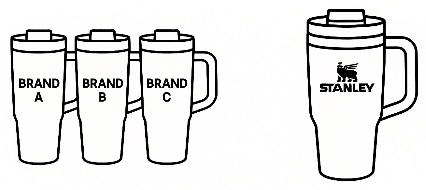
When need crosses the purchasing threshold, we can therefore distinguish:
- Product-need demand: demand for the category increases.
- Brand-impulse demand: desire for a particular brand increases.
How do brands reach each kind of demand?
Whatever kind it is, brands need to turn attention into a purchase. Consider:
1. Search-engine optimization. A person searches for tableware for newlyweds, finds the brand's product, clicks, and buys. This addresses a category need.
2. Major-influencer sponsorships. These primarily create desire for a brand by borrowing the influencer's image. Audience fit still matters, so the category isn't irrelevant, but brand impulse is the larger purpose.
3. Digital advertising. It depends on the ad. Showing newlywed tableware to someone preparing for marriage addresses a personal change and a category need. The creative emphasizes recommendations for that category or sets within a price range.
Showing a compelling Stanley tumbler ad to someone who didn't need a tumbler creates desire for that particular brand. The creative might feature an influencer or a striking image.
Brands already tailor their marketing to these different forms of demand. Let's ask another question.
Which marketing is most efficient?
First, match the marketing to how people mainly demand the product. Promoting practical newlywed tableware mostly through brand impulse, or luxury merchandise mostly through category need, is likely to waste effort.
More importantly, a high proportion of the audience should be prospective customers whose need has crossed, or will cross, the threshold. Conversion should be higher.
For tableware, targeting women aged twenty-five to thirty-five is more focused than an untargeted ad. Targeting those preparing to marry is more focused still. Reaching someone who has actually searched for newlywed tableware is most direct.
Influencer sponsorship works similarly: the closer the audience matches the customers, the more useful it should be.
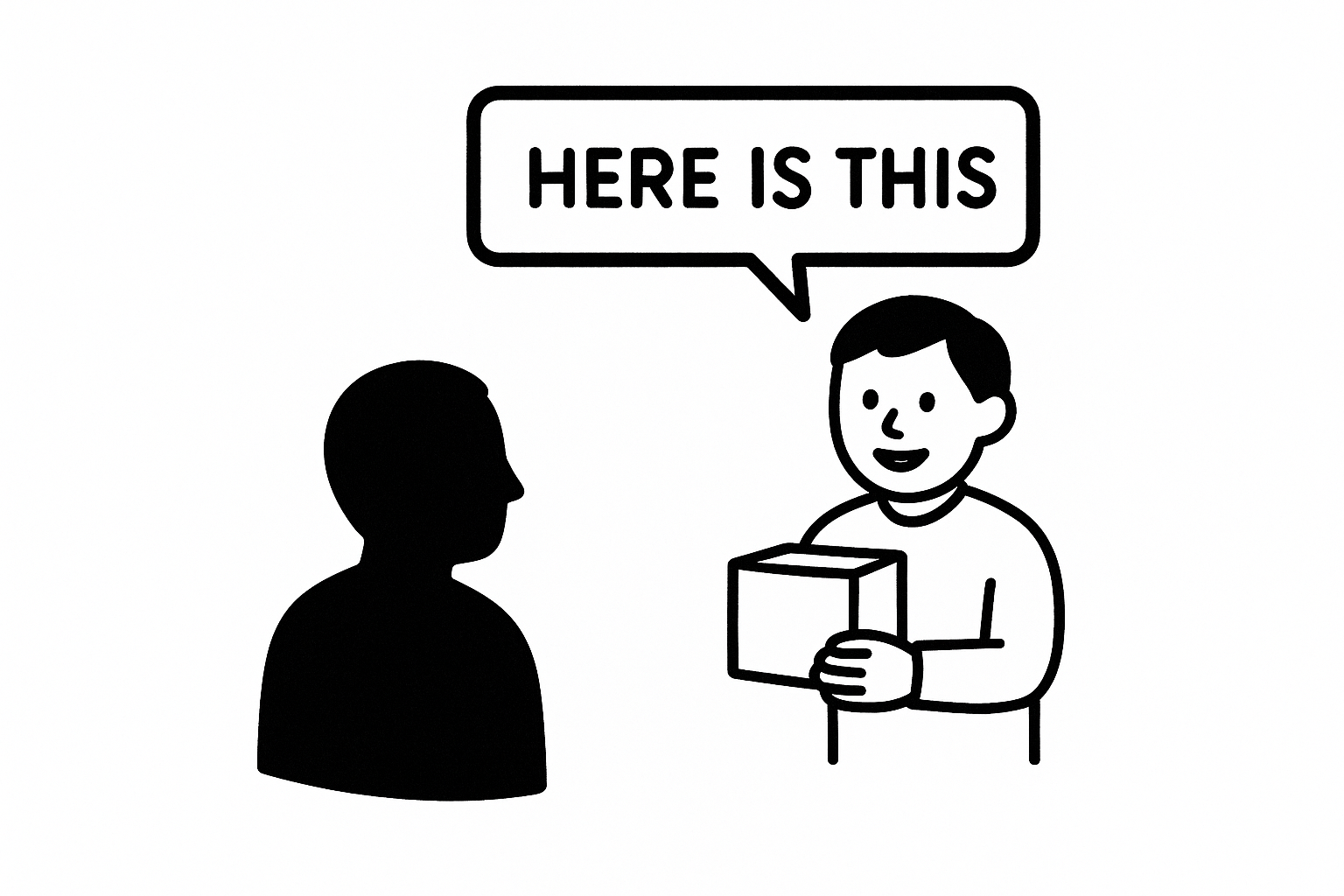
The most efficient pitch is “Look at this” to somebody at the moment they truly need the product. I think organic search's high conversion supports this: searching is the customer saying, “I need this.”
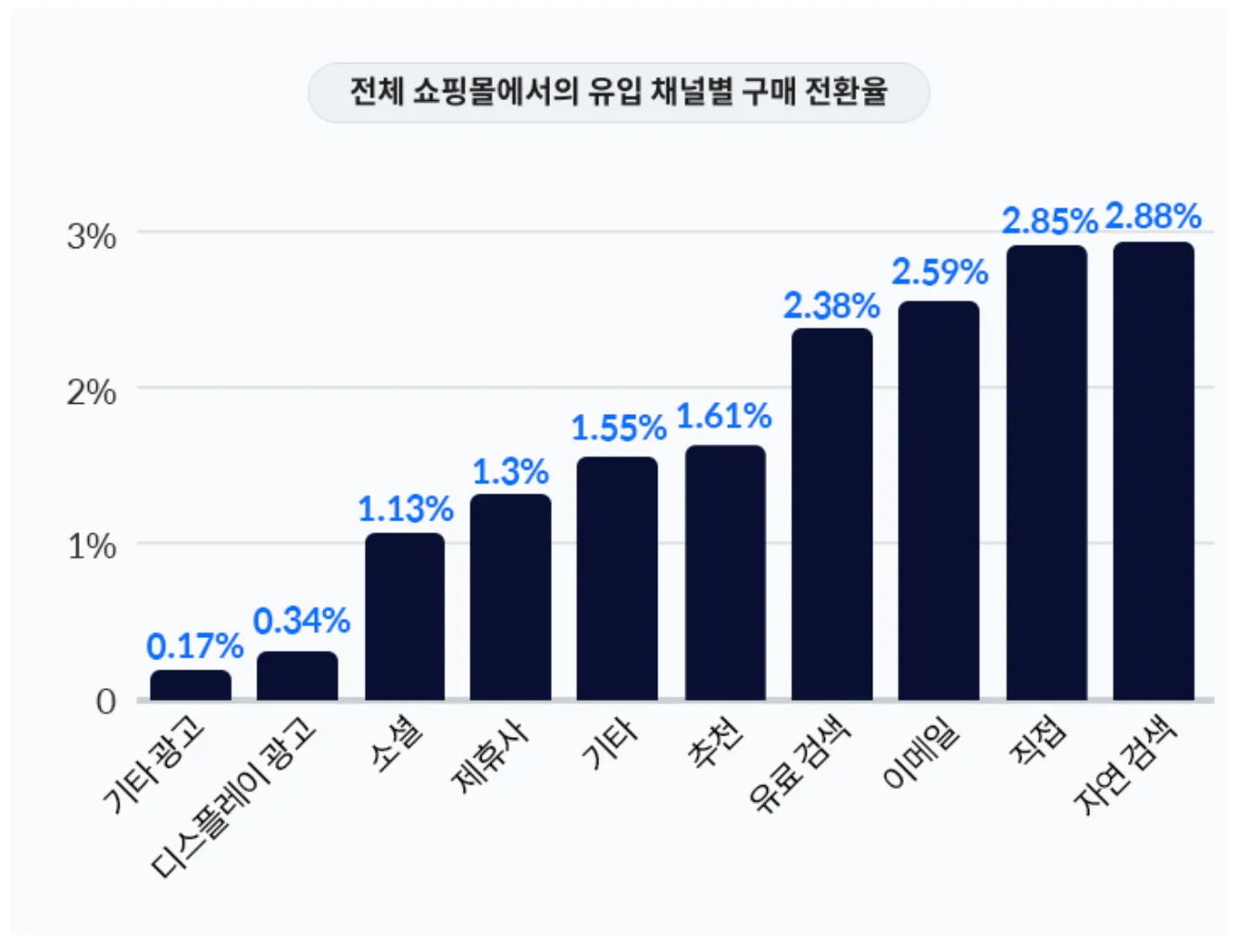
Start with the people already saying they need it. That is product-need demand arising from the customer.
The customer's signals
To reach those people, a brand has to understand their signals.
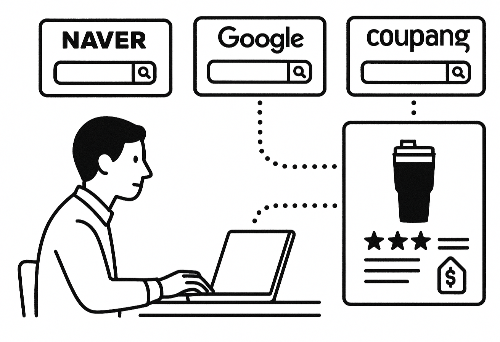
We search Naver, Google, or Coupang. Or an uncannily accurate social algorithm shows us a product first. Then we compare specifications, reviews, and prices before buying.
We're trying to find the best product for a need. The problem is familiar:
It's a nuisance.
If possible, we'd skip the search or ask someone to do it. I imagine that helps explain Toss's Do Everything Silo. Having someone do these tasks is a valuable employee benefit.
Toss's Do Everything Silo aims to handle tasks that otherwise take employees' time, from arranging cleaning and laundry to recommending date restaurants, remembering family occasions, and planning weekend trips.
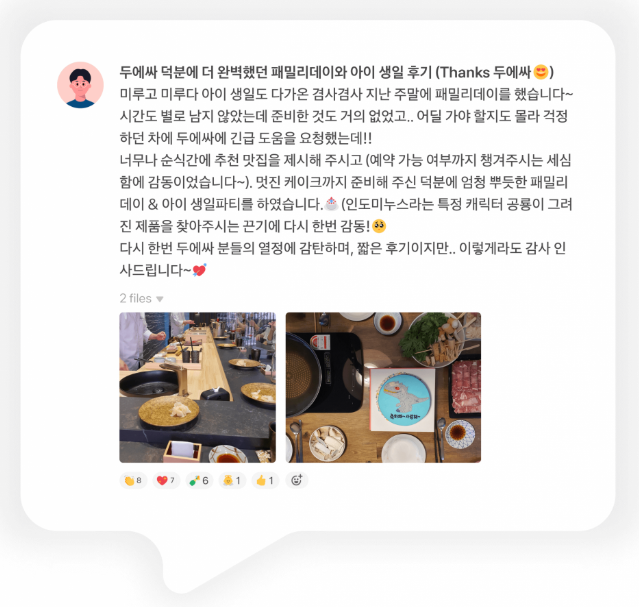
Online commenters once mocked the team as errand runners. I'm sure many employees value it deeply. I would certainly make use of it and be grateful. Elsewhere, assistants or general-affairs teams handle this work.
An assistant
Remember the AI assistant from the opening? If not, blame my wandering structure.
Comparing specifications, reviews, and prices is an obvious task for it. Some signs already point that way:
- Google searches through Safari fell for the first time in twenty-two years after AI search appeared. Source
- Google's search share fell below 90% in late 2024 after years above it. Source
- AI Overviews appeared for more than 11% of queries, and publishers saw lower click-through. Source
For product-need demand, as people stop searching and comparing directly, a brand's fortunes may depend on whether an assistant recommends it. A recommendation gives it a chance; absence from the answer may remove that chance entirely. Revenue will follow.
Shopping features keep arriving
The change has already begun. AI services are adding shopping features as behavior shifts.
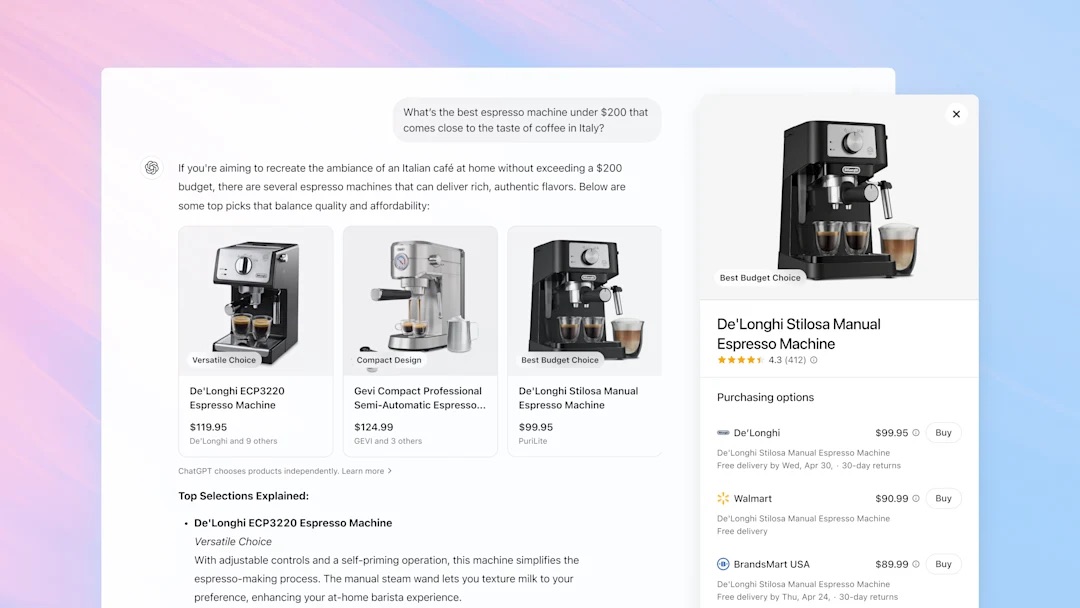
Google introduced AI Overviews in May 2024. Perplexity introduced Shopping in November 2024. Amazon announced Buy for Me in April 2025, covering search, comparison, and purchase. OpenAI also introduced a ChatGPT shopping assistant. At Google I/O in May 2025, Google announced AI shopping features. Microsoft Bing and Anthropic Claude were also entering AI shopping.
Is this simply marketing in a competitive model market, or something larger? Some of it is certainly a way to attract attention and show customers the company isn't falling behind.
But customers are moving from searching to asking, and that makes the long-term change more fundamental. Going from a natural-language request to recommendations and payment, or using images and voice, can be much easier than keyword searches and manual comparison. Big technology companies are putting shopping on their core roadmaps.
The ecommerce model itself is shifting toward AI.
AEO and GEO
By now, I hope it's clear why it matters whether AI understands and recommends your product.
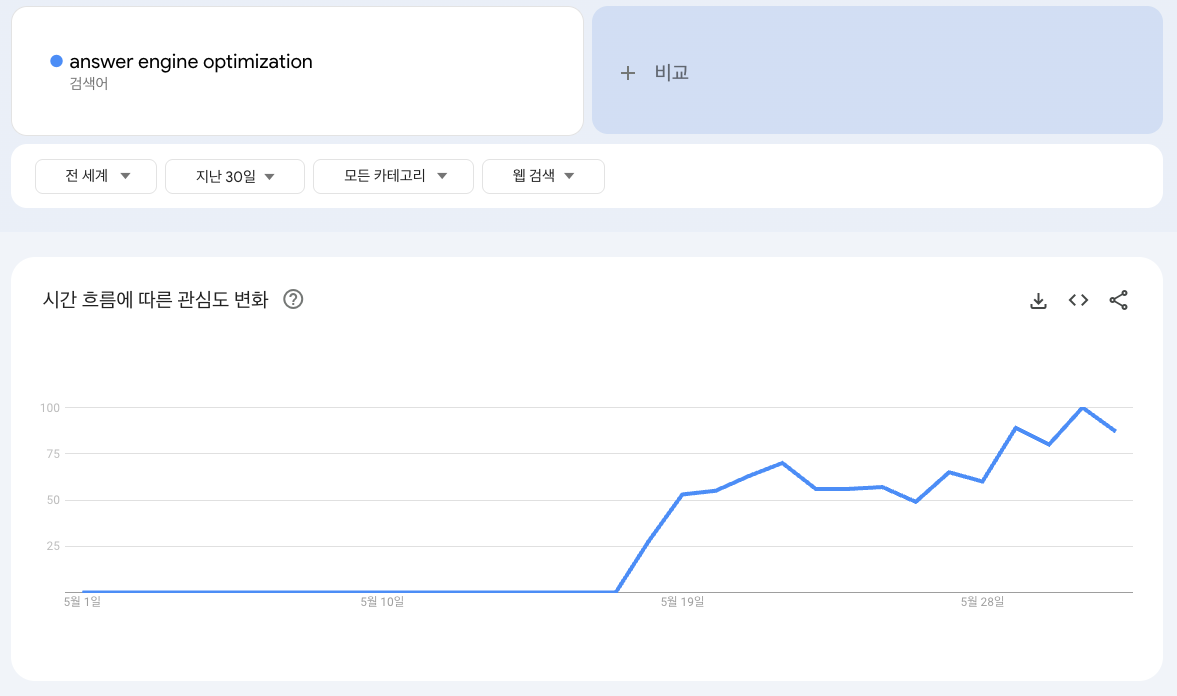
The terminology is still developing. By analogy with SEO, people call it Answer Engine Optimization, AEO, or Generative Engine Optimization, GEO. Interest rose after Google I/O 2025.
What should a brand do?
The real question is how to get AI to recommend your product, or how to do AEO and GEO well. If you run a brand, you may have been waiting for that answer.
Honestly, I don't know yet. Sorry to bring you through a long article without a neat solution.
A few starting points seem clear:
1. Make the site readable to the services' crawlers. ChatGPT and Claude use their own crawlers; OpenAI documents OAI-SearchBot. The product name and detail page should contain useful information matching customer questions, and the crawler must be able to read it.
2. Appear on credible sites. If a service often cites trusted sources, having a brand and product represented there may help it be cited.
The field is young and experience is limited. I'm still studying it, so I can't give a confident recipe. But I think preparation matters. A change in ecommerce's structure will bring both rises and falls.